
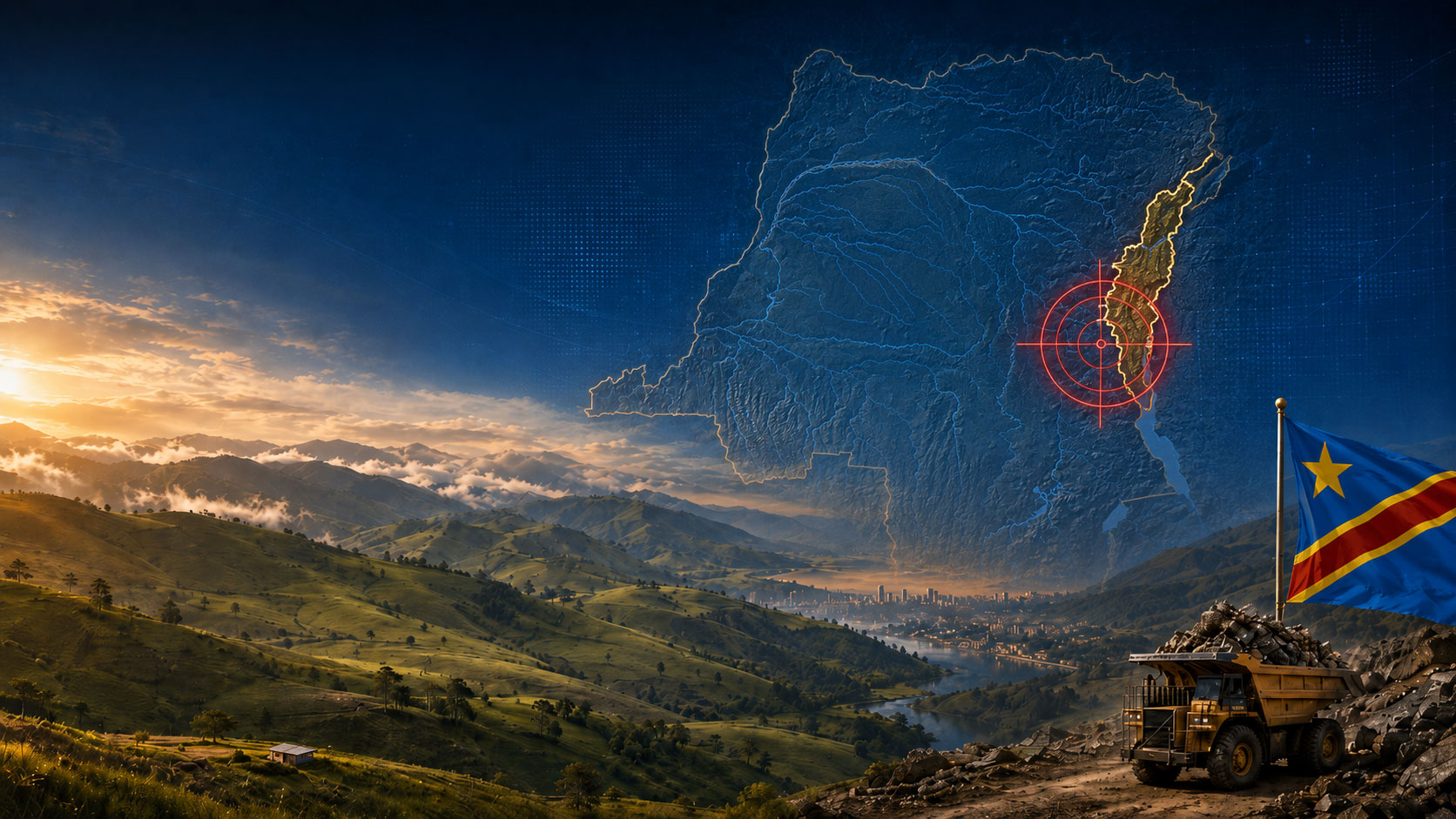
THE CONGOLESE ECONOMY UNDER THE SHOCK OF INSECURITY : A GIANT’S RESILIENCE AND THE COST OF SOVEREIGNTY
The economy of the Democratic Republic of the Congo (DRC) is displaying remarkable macroeconomic resilience, with nominal GDP reaching $123.41 billion and real growth projected at 5.6% for the current fiscal year. Despite the ongoing armed conflict in the east driven by Rwandan-backed M23 rebels and residual instability in various regions, the country’s economic indicators remain positive. This robust performance, recently commended by the International Monetary Fund (IMF) following the successful completion of its latest financial facility reviews, underscores the impact of ongoing structural reforms. A major factor stabilizing the national currency has been the central bank’s gross international reserves, which have solidified at $8.8 billion. However, for the Congolese public, a stark reality remains : this conflict incurs a massive financial cost, heavily penalizing social sectors.
The Price of Sovereignty : War Efforts Crowd Out Social Spending
Securing the DRC’s territorial integrity requires unprecedented budgetary reallocations. Out of a total national budget of 59,021 billion Congolese francs (CDF), the government has been forced to allocate nearly 30% to defense and national security. This represents a massive envelope of 11,896 billion CDF entirely channeled into upgrading the military capabilities of the FARDC and equipping troops on the front lines. This allocation marks a historic peak, drastically up from the 13.12% spent on defense, public safety, and justice combined during previous fiscal years.
From an economic standpoint, these billions of francs absorbed by defense spending constitute critical resources that, under peaceful conditions, would have been directly allocated to key public sectors :
• Accelerating the implementation of free primary education.
• Expanding universal healthcare coverage.
• Building critical infrastructure across the country’s 145 territories.
• Strengthening social safety nets for vulnerable populations.
The political commitment of President Félix Antoine Tshisekedi Tshilombo in this matter is clear. Faced with the constitutional obligation to defend the nation, the Head of State has prioritized national survival. Infrastructure and social development cannot be sustainably built on contested or occupied territory. Security remains the prerequisite for development, and current budgetary sacrifices represent the cost of long-term stability.
From State Continuity to Regional Diplomacy : The Geopolitical Context
To understand current policy, it is useful to contextualize these peace initiatives within broader African diplomacy. The regional framework to "silence the guns by 2060" aligns directly with the African Union’s Agenda. The DRC formally committed to these goals under the administration of Joseph Kabila. Bound by the principle of state continuity, President Félix Tshisekedi maintained these agreements, justifying his initial diplomatic outreach to all nine neighboring countries.
This strategy for regional stability explains why the administration originally sought cooperation with eastern neighbors. The presidential approach relied on a pragmatic economic vision : defusing geopolitical tensions through cross-border trade, bilateral partnerships, and regional integration, under the premise that shared economic interests offer the best defense against armed conflict. While this diplomatic openness was ultimately compromised by Kigali’s shifting posture, it served to clarify regional dynamics to the international community.
Consolidating National Sovereignty and Civic Engagement
Today, the DRC has reached a historic turning point. In response to regional destabilization, a strong domestic consensus has emerged. Under the leadership of President Félix Antoine Tshisekedi Tshilombo, the country has entered a phase of patriotic and sovereign realignment, redefining its position on the international stage. The DRC is shifting away from reliance on foreign security assistance toward self-financed, self-organized national defense.
This shift in national consciousness represents a significant political asset. For the youth, economic actors, and citizens alike, maintaining this sovereign momentum is critical. The current performance of the economy proves that the DRC’s macroeconomic fundamentals are strong enough to sustain military expenditures. In fact, economic momentum is increasingly driven by a revitalized non-extractive sector notably construction, agriculture, and services which helps offset slower growth in the mining sector and keeps the nation on a positive growth trajectory. As long as national unity and this strategic vision are preserved, the DRC remains on track to consolidate its economic and geopolitical standing.